Seaside holidays 11: entertainments
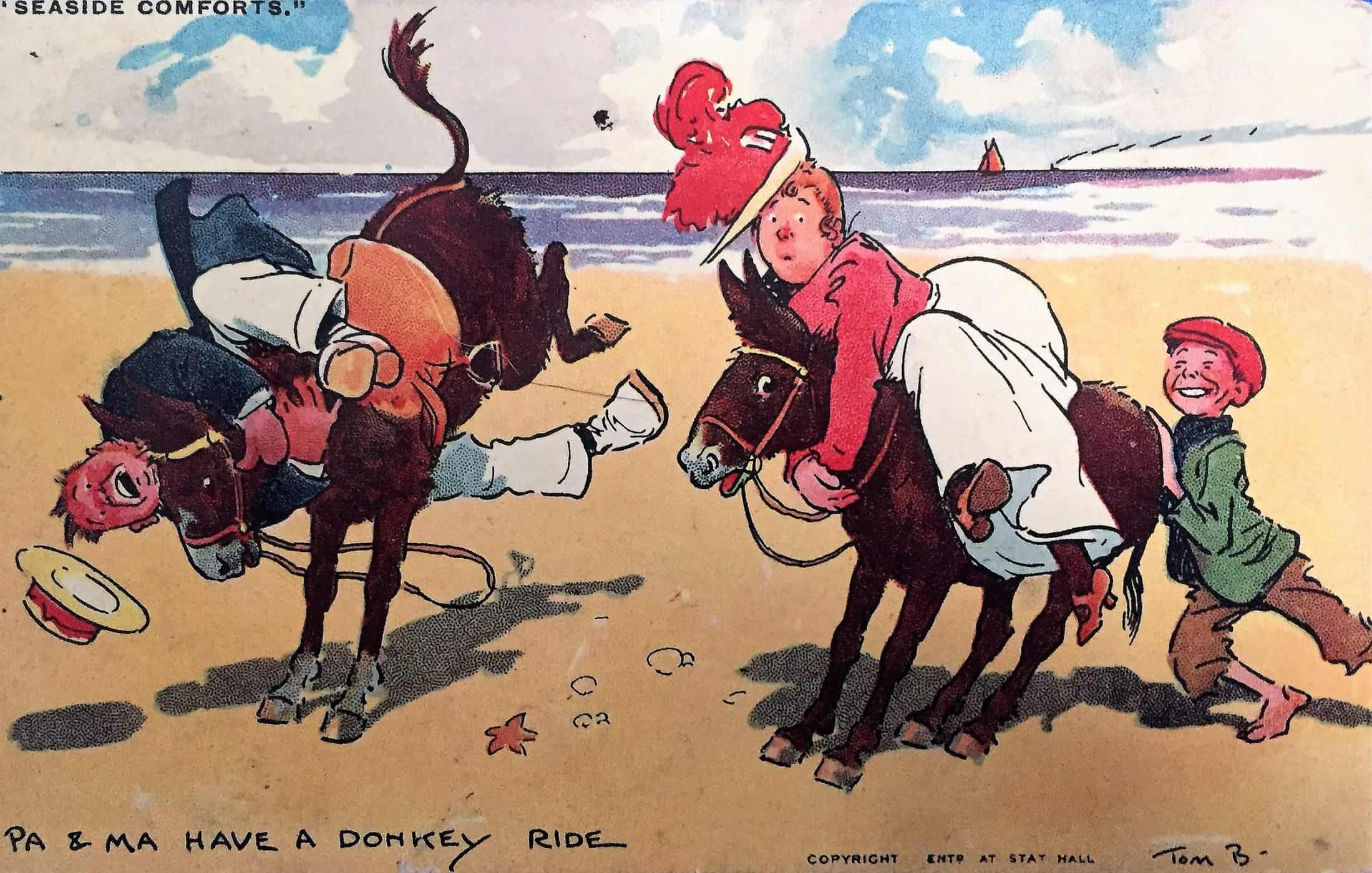
These colourful and comical postcards were created by artist Tom Browne between about 1905 and 1910. They give a real flavour of life at the Edwardian seaside.
In Folkestone there were lots of entertainments available on the seafront below the Leas.
There were donkey rides, Punch and Judy shows, a rollercoaster ride, and not forgetting a stroll along the Victoria Pier and the chance to buy an ice cream!
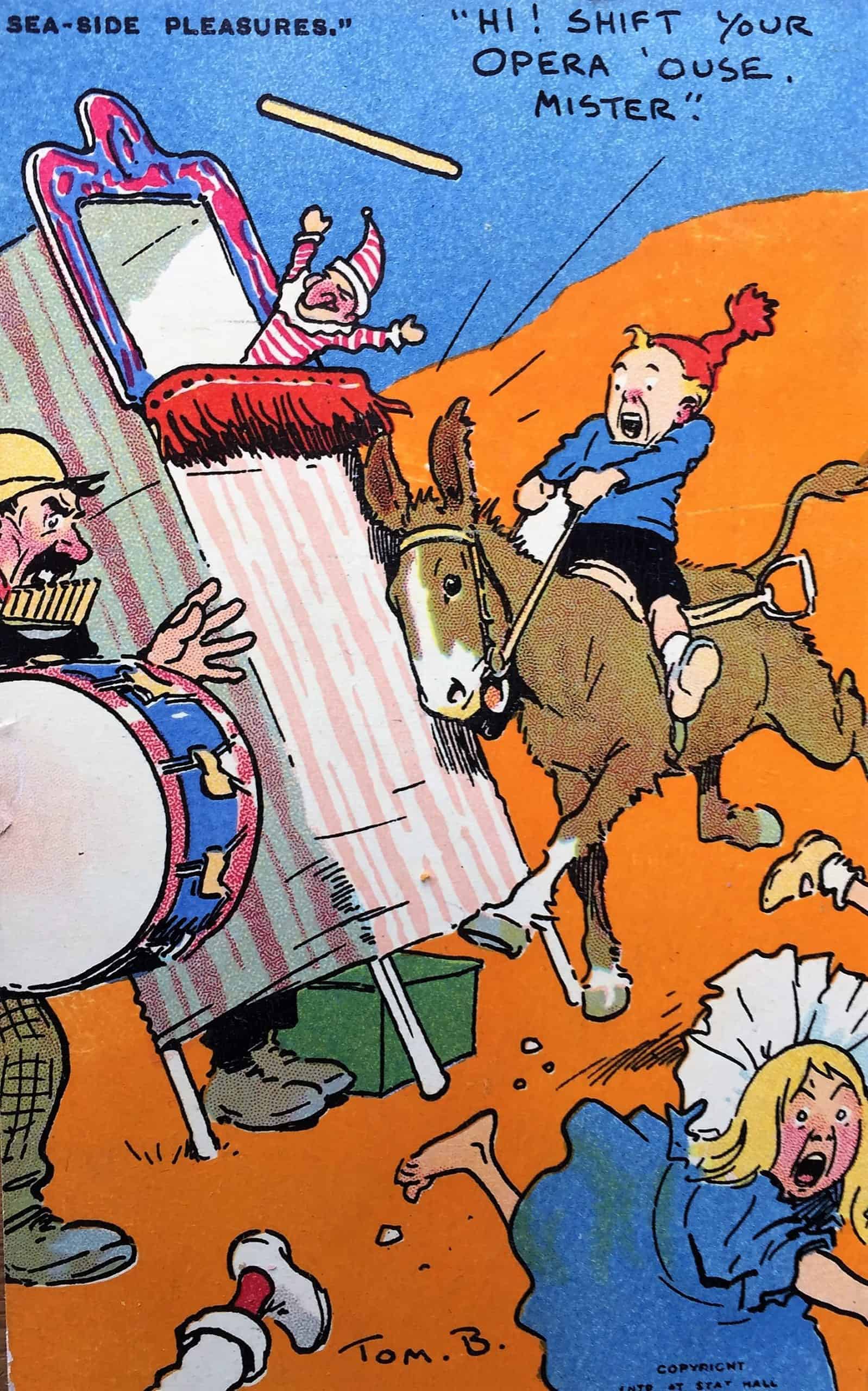
Tom Browne delighted in the comical things that could go wrong at the seaside. Here a Punch and Judy Show has been interrupted by a runaway donkey!
The Punch and Judy Professor (whose feet you can see under the tent) is about to get tipped over.
The audience of children are fleeing in panic. And the man with lots of different musical instruments (called a ‘One Man Band’) is looking particularly annoyed!
Fascinating fact
Henry Hayles, a former weightlifter, was a well-known Punch and Judy Professor in Folkestone.
He even performed in front of Queen Victoria and the Prince of Wales (who later became King Edward VII). He was assisted by his wife, who was a lion-tamer!
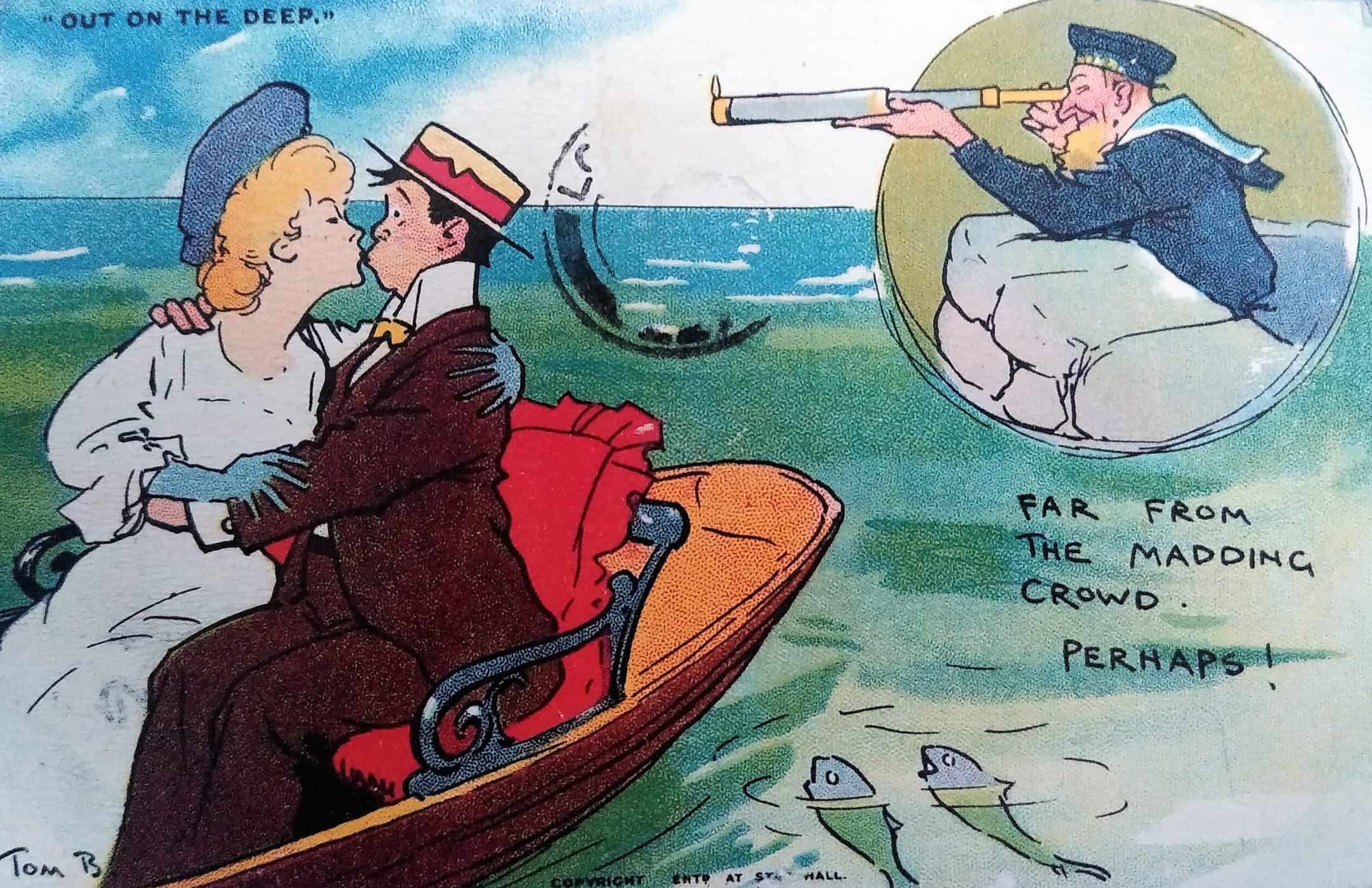
There were lots of rowing boats to hire from Folkestone beach. You could for for a row along the shore or around the end of the pier. Although some people didn’t get that much rowing done!
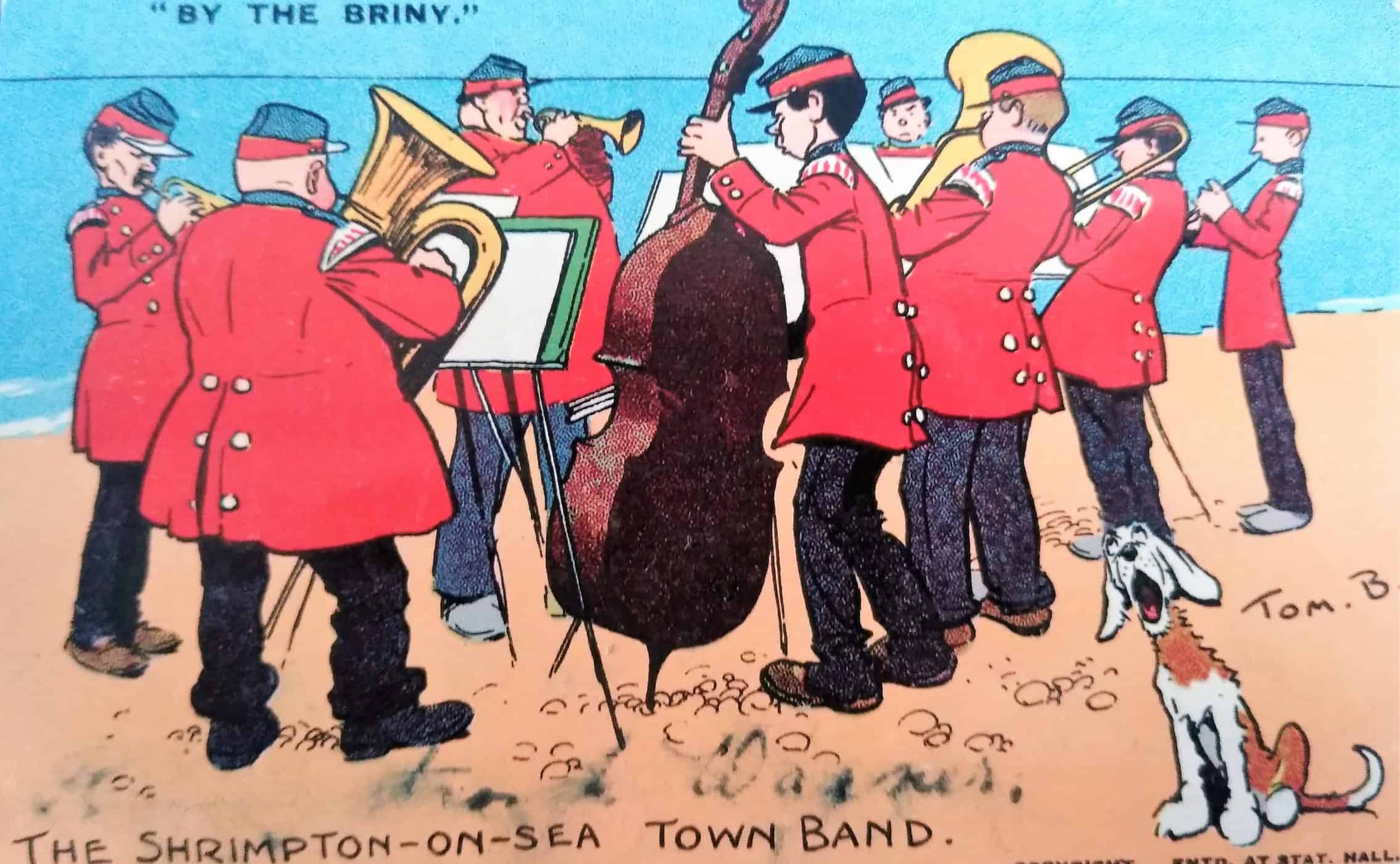
Brass bands were popular in Folkestone too, but the music they played depended on their audience.
More refined classical pieces were played up on the Leas. Down on the beach they often played catchy music hall tunes for the crowds of day trippers
One of the most popular Edwardian tunes was Oh I do like to be beside the Seaside which is still sung today.
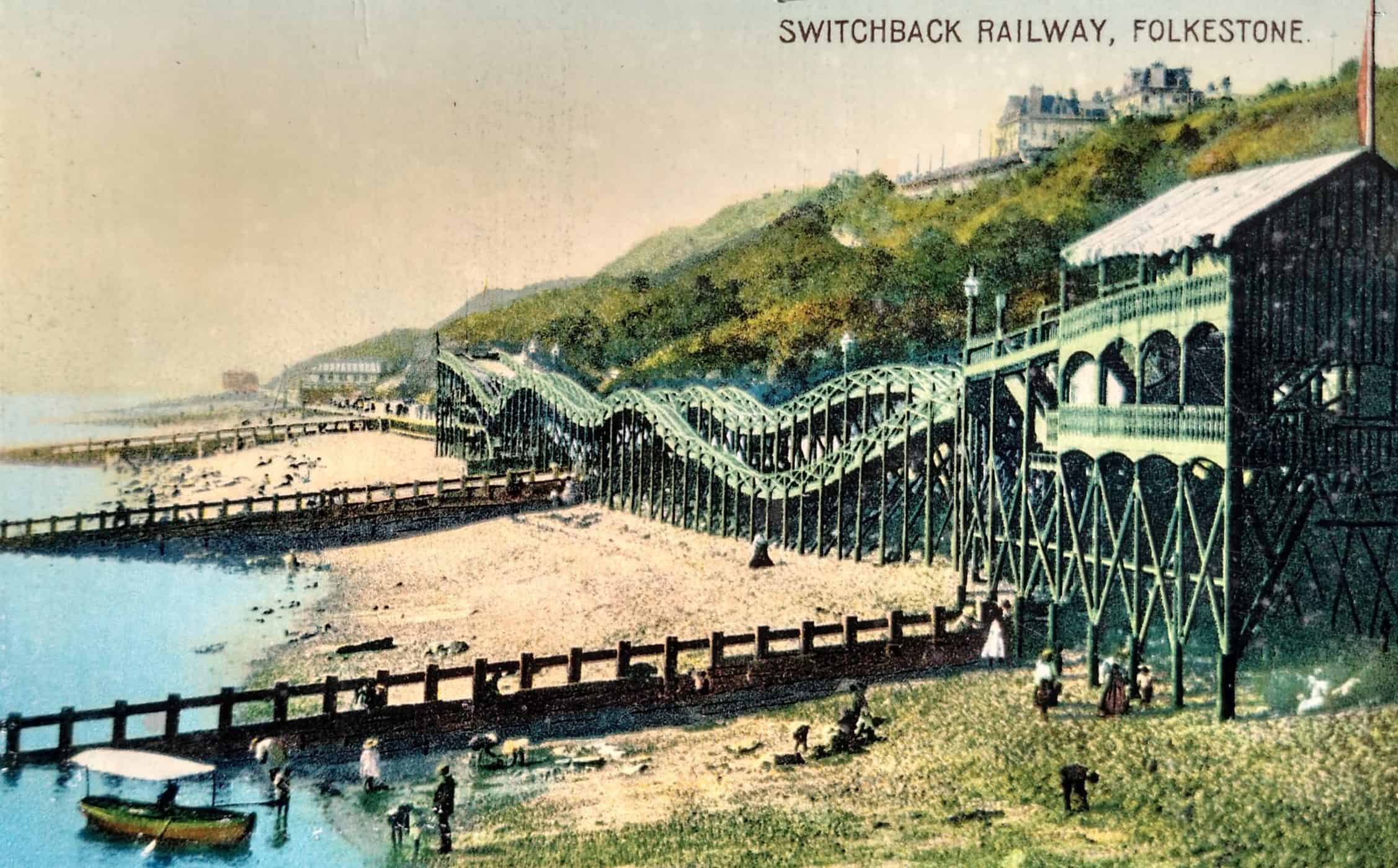
This is a giant wooden rollercoaster called the Switchback Railway or Scenic Railway.
It was a popular seaside attraction in Folkestone from late Victorian times until the First World War. The screams of people enjoying a ride could be heard on the Leas.
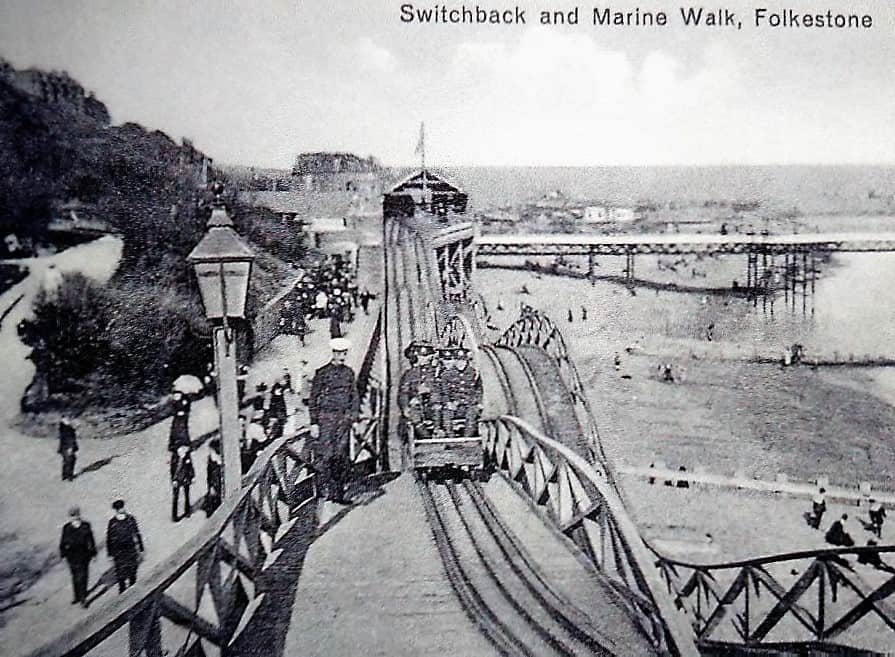
Here some WW1 soldiers are enjoying a ride on the rollercoaster!
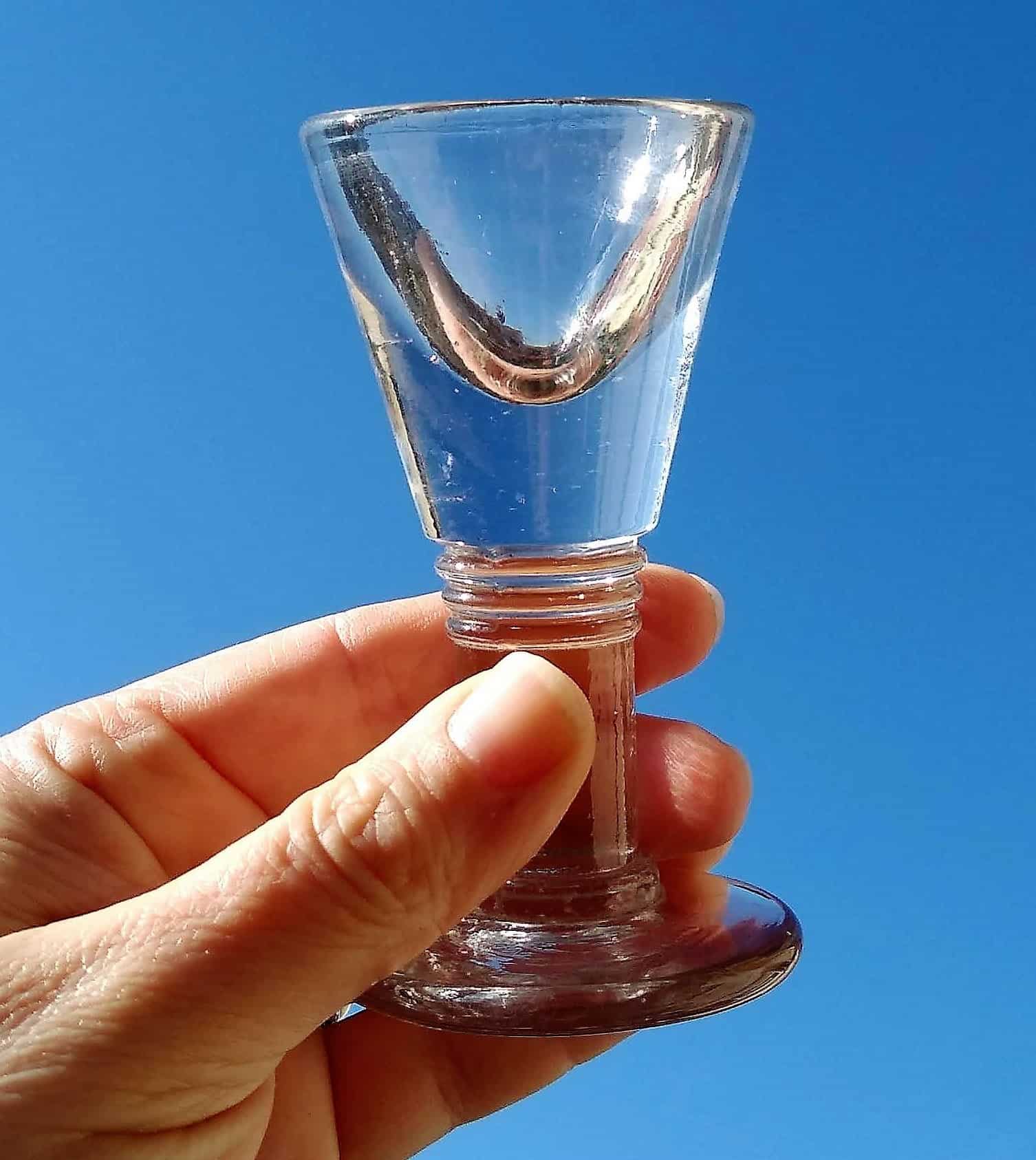
This is a 'penny lick' glass. In the days before edible cones or cornets, ice cream was served in small glass cups.
These were filled with a pennyworth of ice cream and became known as ‘penny licks.’
When you finished licking your ice cream, you returned the glass. It was (hopefully...) rinsed out for the next customer.
The thick glass made it look like you had more ice cream than you did. This meant there were lots of dissatisfied customers!
It was also unhygienic, as some sellers didn’t wash the glasses between customers. Penny licks were blamed for spreading disease. Because of this, in some places they were banned.
They were replaced by the ice cream cone, which came to the UK from America in the early 20th century.