
Seaside Holidays activity 6: fun on the pier
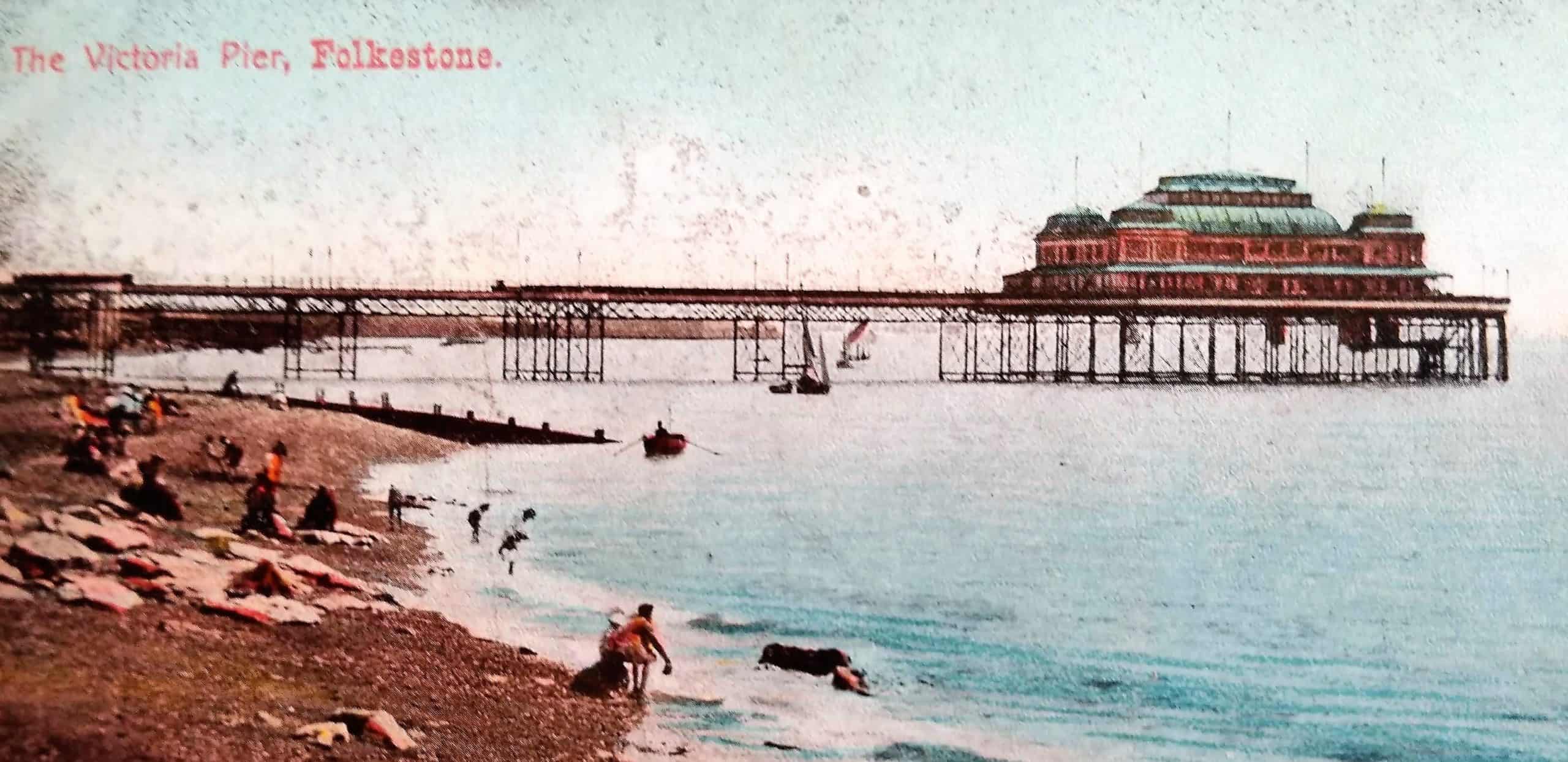
Overview
Design a new pier for Victorian Folkestone and a programme of daytime and evening entertainment for children and adults.
Learning objectives
Knowledge and understanding of seaside piers, how and why they were built and the different kinds of entertainment that happened on them. Develop skills and confidence in building a strong and stable working model, and in planning and performing an End of the Pier Show.
Curriculum links
KS1-2 Science and Design Technology (designing and constructing a bridge, forces)
KS1-2 History (Local Area Study, seaside holidays).
KS1-2 English (design and perform an entertainment programme)
KS1-2 Music (performing traditional seaside music and songs)
Working in small teams, pupils find out about techniques (like cross bracing) that Victorian engineers used to build strong and stable seaside piers like Folkestone’s Victoria Pier.
They then use this knowledge to create their own model seaside pier, complete with promenade decking and an impressive pavilion for end of the pier entertainments.
The following websites are useful for research.
https://fiveminutehistory.com/18-victorian-seaside-pleasure-piers/
https://historicengland.org.uk/images-books/publications/british-seaside-piers/
Build a Victorian pier
The model pier can be built using a range of everyday craft materials including:
- Corrugated card
- Paper straws
- Sticky tape
- String
- Candy floss sticks
- Lolly sticks
- Pipe cleaners
- Glue sticks
- Scissors
Attractions can be added, painted and decorated.
Completed piers should be judged for stability, artistic merit and the quantity and quality of their entertainments.
Teams should include a programme of daytime and evening events for children and adults, to accompany the model.
As an additional activity the whole class can combine to plan and deliver their very own End of the Pier Show.
Learn with Objects links
See Learn with Objects Seaside holidays 6: walking on water – or above it for information and ideas.